
Yanaguana volume 1, issue 1 fall/winter 2025-2026 a literary journal from San Antonio, Texas
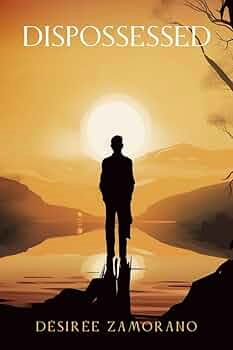
Lorena Ortiz Reviews Désirée Zamarano's Dispossessed
Running Wild Press, 2024
What Happened to Family?
To live in the United States, in the present second-term Trump era, is to live side-by-side with Manuel Victor Galvan, the orphaned, Mexican American protagonist of Désirée Zamorano’s novel, Dispossessed.
I first read Désirée Zamorano’s novel, Dispossessed, in October of 2024, when a second-term Trump presidency was yet uncertain and the thought of another four years of MAGA was unfathomable. Manuel Victor Galvan, the orphaned, Mexican American protagonist of Désirée’s novel, felt like a character in a historical fiction who imparts the unpleasant truths of United States history.
In Dispossessed, we meet Manuel, age two, on a beach, enveloped by the love of his parents and big sister, Lulu. The waves are scary, but his father’s strong arms are there to protect him. By page two, the unthinkable has happened; Manuel and Lulu are torn from their parents and discarded in an unfamiliar environment. By page four, his beloved Lulu is also gone and so begins Manuel’s lifelong journey to figure out what happened to his family. Lulu leaves him with the directive, portate bien, seas un buen niño, seas mi hermanito, valiente y bueno, words that would become his mantra for the rest of his life.
Through a stroke of luck, divine intervention, or maybe the prayers of his missing parents, Manuel is fostered by a kind woman, the aptly named Amparo. She is Manuel’s refuge. With time, Manuel forms a different kind of family, a new family, with Amparo; her war hero son, Toño; his school friend, Beto; and later, with Lizette, his wife and angel.
Manuel’s makeshift family may not have faced the same dispossession of family members as he did, but deprivation abounds. Whether it is the theft of a physical house, the lack of respect, the inability to earn a wage, or the loss of a child, each character faces the revulsion of White Americans and the systems of oppression and bigotry. Hope for each character takes a different shape—Jesus, the almighty dollar, a piece of land to call their own.
Dispossessed reminds us of an ugly era in the history of the United States, but it is also a story for today. It is a story for all the families who face separation and for those of us who bear witness. It is a story that reminds us that the United States is still a country that will toss the poor and underprivileged aside and strip them of what is a natural right—the right to be treated with humanity.
When you read Dispossessed be prepared to let your heart be broken, let the confusion of a young child seep into your heart, and wonder how a young innocent could possibly navigate a world solely that only seeks to crush him. Dispossessed is the right book for today. A glimpse into the horror of deportation and a hope in communities that band together in the name of what is right and good.
Lorena Ortiz is a Mexican American fiction writer born in California and currently living in Washington, DC. Her work has been published in PenDust Radio, The Acentos Review, The Latino Book Review, Konch Magazine, and Hola Cultura. She has been supported by VONA, Stanford, Tin House, Macondo, and Kenyon. Lorena is a 2025 Periplus Fellow and a recipient of a 2026 Vermont Studio Center Residency. Lorena is working on her debut novel.
Read Lorena Ortiz’s interview with Désirée Zamarano at Hola Cultura, “a 501(c)3 nonprofit organization that celebrates Latine arts, culture and humanities for the benefit of the Latine community and Latine-culture lovers everywhere!”
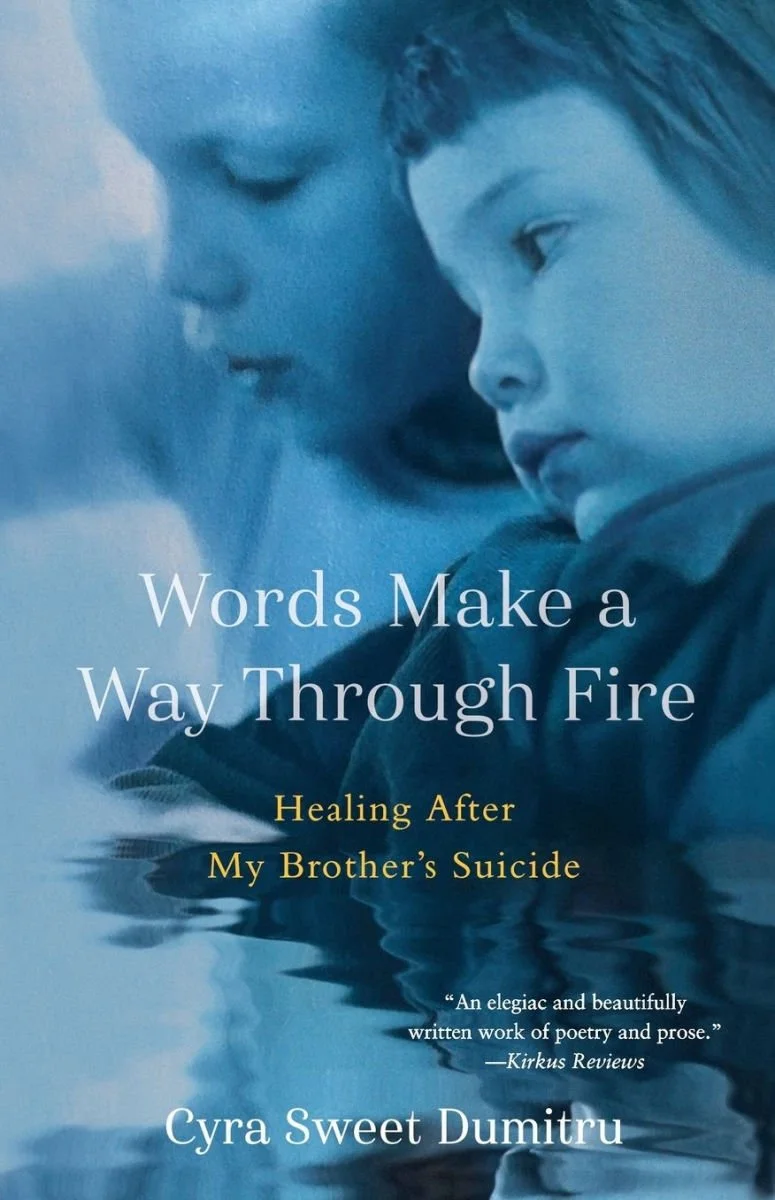
Natalia Treviño reviews Cyra Sweet Dumitru’s Words Make a Way Through Fire: Healing After My Brother’s Suicide
She Writes Press, 2025
First Star in the Night Sky
“Imagine the night sky curved starless
and black, like the skin of an otter.
How dark the world below—
a deep and silent shadow
Swimming in grief.
Now imagine when the first star
burned itself in the celestial sea.
How blazing its tiny beauty,
its unexpected light,
the advent of all stars to come.”
Cyra Dumitru’s Words Make a Way Through Fire: Healing After My Brother’s Suicide (She Writes Press, 2025) may seem like a book that is so particular in focus and potentially quite painful to read that some readers may glimpse at the title, sense what it is signaling, and resist reading for fear of spending a sustained period of time with one thought: how to survive, let alone heal from, one of the most profound of human losses to contemplate, the death of a close family member to suicide? However, in the hands of the extraordinarily gifted poet, writer, and poetic medicine practitioner, Cyra Dumitru, this book is an act of presence, companionship, and storytelling of how evolving as a writer has assisted the author to heal. This book is not just for the deceased brother to whom this book is dedicated, David Rockwell Duff Sanborn, but for all of us who will benefit from understanding the process of healing from trauma through creativity.
With exquisite detail, Dumitru documents her connecting with nature through this multi-genre memoir that sits between the multiple illuminating lenses of narrative, journal, and direct address epistles that all point to the poetry which acts as an axis upon which all of the other genres depend. We enter the psychological landscape to understand how the healing powers of metaphor and lyricism can lift our consciousness and spirits to new awarenesses.
This book does not explain the why of the subject matter, but is about the how—the how of living, writing, and evolving after this great tragedy occurred in her life. Our self-help literature and self-care centric media teem with texts, content creators, experts, and authors who want to teach us in theory how to cope with and grow beyond trauma, to work through it using a toolbox of their prescribed methods, but this memoir has other objectives.
What is at stake in this book is a person’s memory, David’s, its meaning in this world where he exists beyond the violence of his death. When I prepared to interview Cyra about this book for Gemini Ink’s The Big Texas Author Talk this past November, she kept referring to this book as a container for her grief, and illuminating container it is for poets and all human beings who have ever suffered or survived past a point that left them wanting to want to but unable to tell an unspeakable story.
She refers to metaphor as having the transcending powers to assist in her need “to write a very direct poem about [her] sensory experience of [her] brother’s suicide.” She continues: “Out of the blue, I discover a way to unsilence myself. Through the gift of metaphor, through a generative detail.” She says this gave her “both a psychologically safe container and spiritual landscape for speaking [her] long-held, sensory truth of bearing witness.”
This container, so gently and purposefully wrought is a beautiful multi-genre companion, punctuated by and centered around revelatory and essential poems that move the narrative forward and deepen their surrounds. This hybridity reminded me of Basho’s haibun masterpiece, The Narrow Road to the Deep North, not only because it seamlessly weaves between prose and poetry that draws heavily on observing the gifts offered by the natural world, but mostly because it uses the elements of poetry, space, air, and breathing room to document a very personal spiritual journey to the wild interior waters, where soul and body meet in the context of a healing journey that is grounded in writing.
As Dumitru details her history of being a lifelong swimmer and her wonderment of its healing gifts, she allows us a moment of insight into its meaning in the poem, “Estuary: The Snake River, Maine”:
“I enter silence as we do
the estuary—
//
We join hands and float on our backs
perfectly content that living
means swimming with the dead—"
This and the other poems in this memoir work as containers within the larger container that demonstrates ritual, remembrance, and continuity to assist us when we grieve. Readers will learn how writing, listening, and observing the cycles of nature in the world are vehicles to help us travel the liminal spaces, the complex and painful terrain that exists between the living and the dead.
Encountering grief is never a choice, but this long-cured love-letter to the dead and to all of its harrowed, numb, and weary survivors opens us to wonder, love, action, and survival past the pain.
Born in Mexico, Natalia Treviño is the of author the poetry collections VirginX and Lavando La Dirty Laundry. Her awards include the Alfredo Cisneros de Moral Award, the Dorothy Sargent Rosenberg Poetry Prize, the Menada Literary Award from Macedonia, and an Ambroggio Prize for co-translation from the Academy of American Poets. Her next book of poetry, When You Were Human is forthcoming from Flowersong Press. Her first novel The Road Back is forthcoming by Arte Público Press.