
Yanaguana volume 1, issue 2 spring/summer 2026 a literary journal from San Antonio, Texas
mónica teresa ortiz
interviews
Juania Sueños
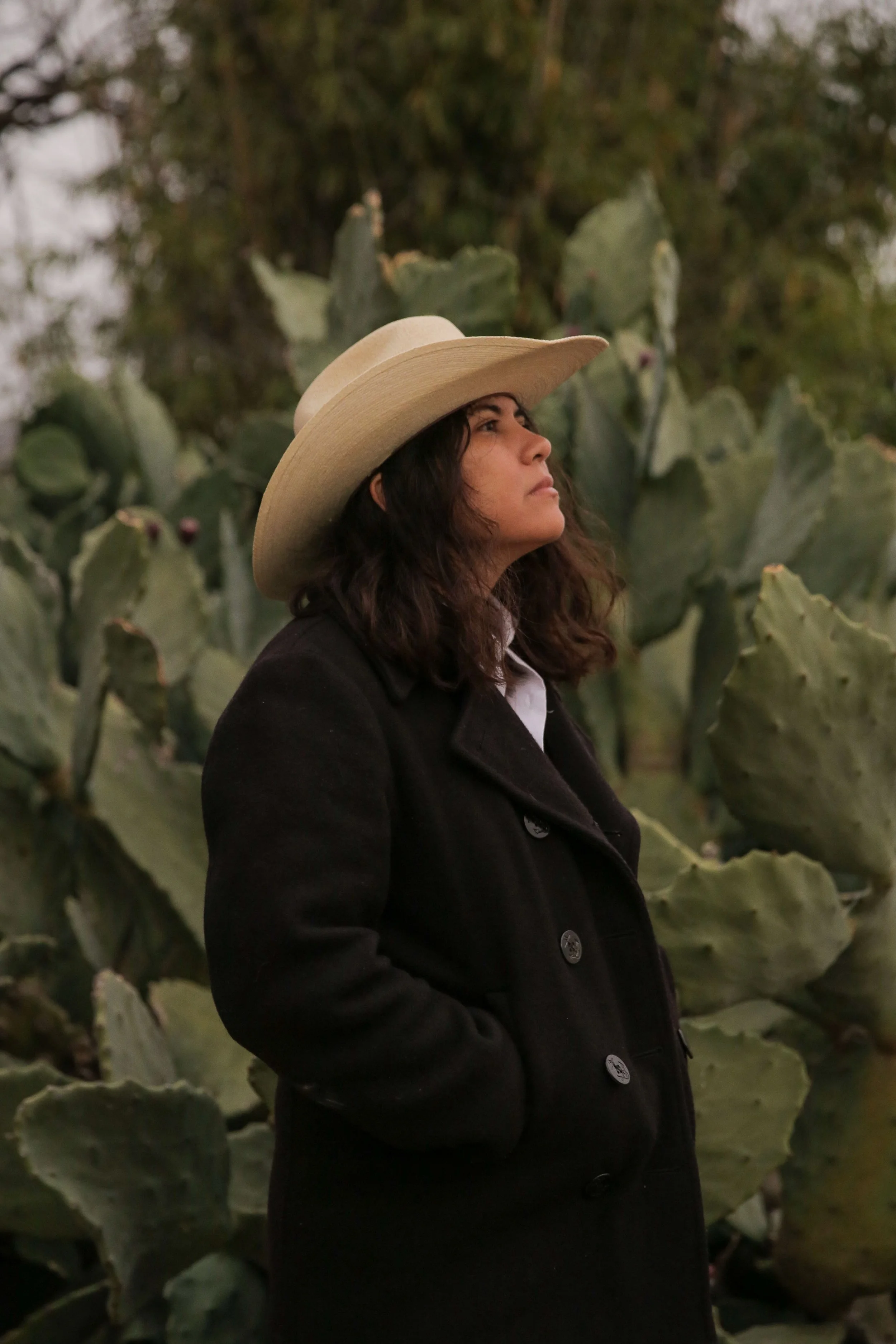
mónica teresa ortiz
Juania Sueños
“I’m in this constant state of digging myself out of all that basura.”
“it feels like a guiding line, an attempt to unearth our stories”
“the doghouse extends on and on to a vast number of the population”
“that relationship between the material and immaterial aspect of language”
“I don’t pretend to have a process.”
“It is important to allow the poet space to speak.”
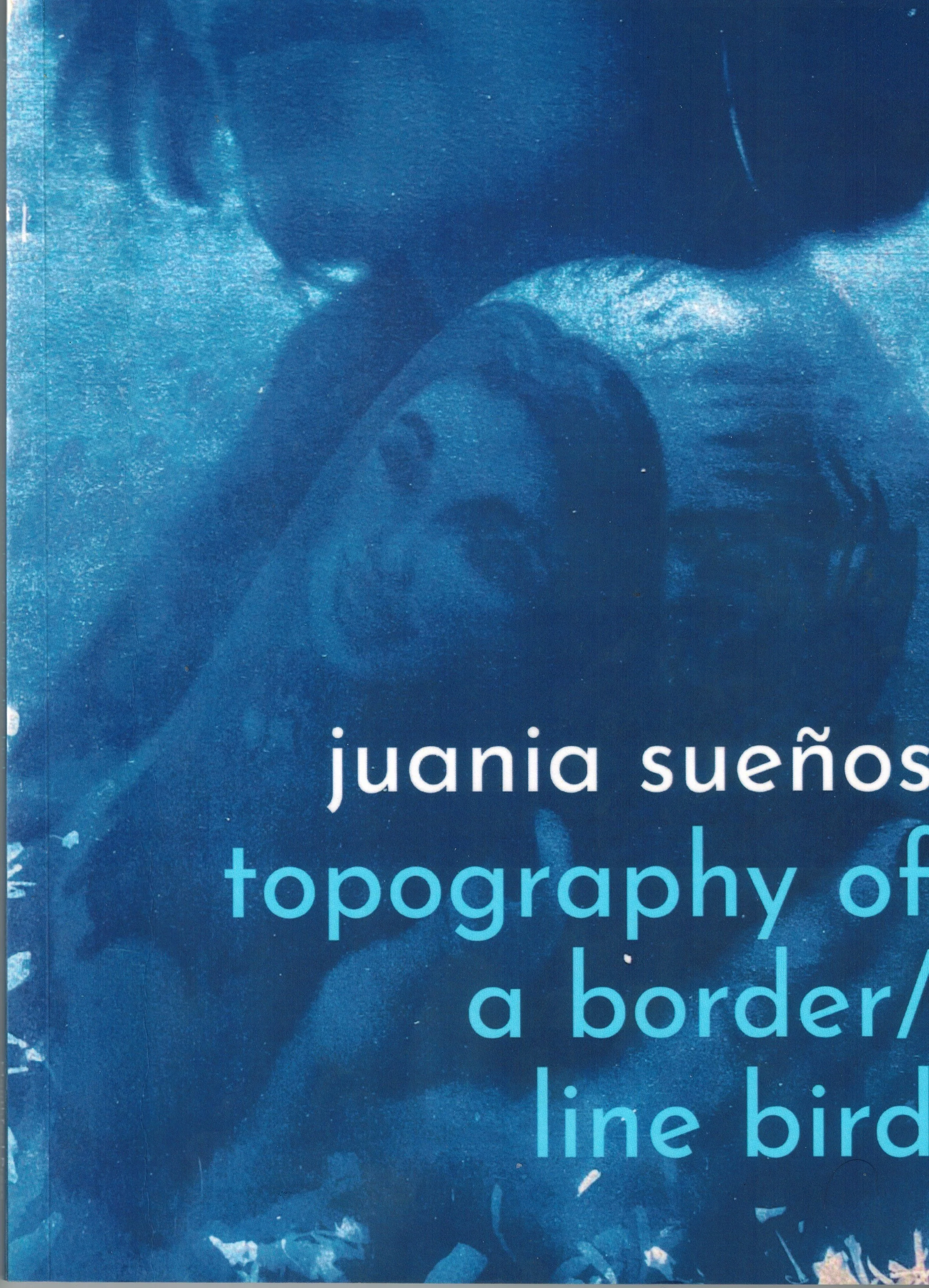
topography of a border/line bird
Mouthfeel Press
Many years have passed since I met Juania Sueños, co-founder and editor of Infrarrealista Review and author of the hybrid poetry collection, topography of a border / line bird, which came out in September 2025 from Mouthfeel Press. We circulated in and around one another in Austin’s literary scene, and I have been fortunate enough to watch Juania’s work as an editor and poet bloom.
Although now we are many miles apart, we were able to have a small exchange on the new book via email. We are both Pisces, and the ebb and flow of conversation moved fluidly like ocean waves. I mostly asked small questions, and Juania is a generous poet, so their responses shape the majority of this interview. It is important to allow the poet space to speak.
We started by talking about our dreams. I had been experiencing the most intense dreams, and I was spending time with topography of a border/line bird and its gorgeous cover. It’s been good to read poetry that is not ahistorical and not immaterial.
mto
We are inundated by images and news of violence and atrocities committed by the U.S. and its proxies, and there is (for me at least) heaviness and rage for the continuous targeting of Palestinian journalists and writers that I find it hard to write most days. How was the experience of writing this book for you? Can you describe some of the process/emotions of making art in this moment? How long have you been working on this book?
JS
I share your sentiment of everyday feeling emotionally explosive. The world is on fire. I'd love to hear about your dreams. As a fellow Pisces, I have intense, vivid dreams that I try to pay attention to.
Last night I had one of seeing my spirit fly off toward the full moon, then there was darkness, nothingness, and suddenly I woke up with this feeling that a force had propelled me out of sleep, like a bucket of water had been thrown on my back and I felt that hit. I've never had a dream like that.
To answer your question about my writing process and justifying art during these times of persecution and violence via the U.S., I don't. I don't pretend to have a process. I wish I knew how to find "discipline," but I do know for me, there isn't inspiration, though sometimes a sort of aspiration. I often find the ritual that helps me write is being in connection with others, and by connection, I mean feeling their pain.
Being ripped apart from my motherland, and my mother indirectly (she worked so much I never saw her once we came to the U.S.) left a void that I tried filling with unhealthy romantic relationships and drugs from the time I was a pre-teen. I used to shame myself for those choices, and for those insecurities, or what I saw as this incessant need for validation, which I now realize is a mere need for feeling necessary–non-expendable, which is a mechanism of empire: making people feel disposable.
I don't write when I'm in that vortex of myself, in my own pain, but when I contextualize it within my realm, within my emotional inheritance, which is intrinsically tied to empires of all kinds. I only write when I feel my mother speaking to me, my grandmother, my great-grandmother, my aunt, god themselves.
Mostly, I don't write. I talk to people. I spend a lot of time in Mexico, in Zacatecas, in particular, where I'm from, and which is a constant dumpster fire of horrid news, of violence and unrest and poverty. If you Google "Zacatecas" you'll see that it's a home to a UNESCO World Heritage Site and that it's also plagued by organized crime—some headlines will read "most terrified place in the world" (that was two years before the war in Palestine escalated) and a DO NOT TRAVEL under the U.S. government Travel Advisory website.
And when I'm there, I feel free. I don't feel safe, by any means, but I feel free. I feel like something opens up and I'm able to finally connect with other people, with most anyone. I feel able to go up to an army soldier, standing there at the UNESCO Heritage Site, actually, the plaza and Basilica in the historic downtown, and ask him questions, while he adjusts his menacing assault rifle, and I find out his native tongue is Nahuatl, his Spanish as heavy as his armor, and his background as exploitable as the silver mines in the city of Zacatecas. He taught me that this type of weapon, similar to an AK-47, is manufactured in Mexico and called a "FX-05 Xiuhcoatl." That's how it's sold.
In Mexica "Aztec" mythology, Xiuhcaotl was a god but he was also a weapon, like a fire/lightning bolt, Huitzilopochtli used to murder his sister Coyolxauhqui (who's since remained trapped, dismembered in the moon.) That lightning bolt was then sitting on an eighteen-year-old's hip. That's capitalism. That's empire.
I have a poem in the collection titled “The Temple of Teotihuacán” where I try to explore this link between violence and love that I seemed to carry so deeply I found myself in abusive relationships, this concept that my grandfather showed me. He was a machista man who abused his wife, could be awful to her, and he was also the most wonderful person to me my entire childhood. I was trying to figure out how we carry this dissonance, these loyalties to people, to empire, to history.
I often think about the symbols of the Chicano Movement, all of this gorgeous Mexica imagery, which is, of course, a way of rejecting an empire, the U.S. and Spain's legacy by reclaiming indigenous cultural markers. But I also know they too were a massive empire, they too enslaved four hundred peoples! Four hundred groups of people. That was how by the time London had a mere twenty thousand people, in Tenochtitlan alone, there were two hundred thousand people. And yet, I can't seem to shake off this sort of Mexica pride. Just like I can't shake off the love I feel for my grandmother and my grandfather even in their afterlives.
On how the book came about: I started working on this collection during my MFA when I was forced to write short stories at the whim of a schedule and forced to think about an audience, to think about how my words would be consumed, not heard or considered, but digested whole, and I decided I didn't want to participate, or rather, that I couldn't because I had this terrible mental health episode, and I didn't know how to process it. I'd been working on a novel about a small town in Mexico, and I started to get this feeling that I was exploiting my culture for the sake of a white audience. I started drinking a lot and my health continued to worsen. I didn't feel I could purposefully use "craft" and stylize what was going on internally. I felt like I'd actually lost it, that I was a real loca! haha.
And I was hanging out with poets, reading more poetry, etc., so I started writing more prosaic poems. Shortly after, I lost my maternal figure, the only other warmth and beam of light throughout my childhood, I thought I was getting deported because of a legal issue I had, my partner at the time nearly killed me, and I was suddenly uprooted from my home due to that legal concern and sense of danger, it just sort of convulsed out of me during the course of three years. I wound up spending some time in an in-patient program in Guadalajara, so I wrote a lot about mental health.
mto
So where do you connect the relationship in your work between poetry and politics? Is there a balance you are looking for or how does it work for you?
JS
When I think about the "politics" in my poetry, I don't think they're there. I don't start out to write a "political" poem and balance the contents between politics and love. I write about love, love for somebody whose life was cut short by gunned hatred or a government pundit, love for the land and even its brutality—it too holds love.
If you think about it, brutality is surrounded by love! Because from it emerges grief and loss and memorialization, loyalty. The poems in my collection that talk about a specific issue or event of that sort were love poems I chose to write to grieve and memorialize somebody, like Ezequiel Hernandez, like Jesus Ivan Sepulveda.
I wrote those poems because it's the only thing I felt I could do—it was my own form of justice, or of offering something. I feel I can't force their murderers to repent, or the government to change its policies, but I can honor them however I can. I've thought about them so much, researched them, their interests (I even interviewed two of Jesus Ivan's companions, who were present during the attack, for a Texas Monthly reporter not long ago), that I feel we're part of each other's paths now. If I mostly feel cynical about poetry, sometimes I feel it's our only bloodline for survival, or it's at least been mine more times than I can count, not because it "heals" me (I think that term has been squeezed out by capitalism too, like it's something you can obtain) but because it listens.
mto
There are a lot of connections to land in these poems. What do you think the poems are saying/doing in that relationship to the land around us? to the histories?
JS
It's funny, my relationship to land has always been the only constant thing in my life. My status changed, and so did my home, and for me, the way my brain is wired made some of that geographical shuffling blurry–names changed, but landscapes, landscapes only cycled colors, but they were otherwise the same. They, no pun intended, wholeheartedly grounded me.
Land is the only thing I trust to tell me what's safe—how to dress, to eat, to speak, and even how to carry myself, what energy to embody. I truly believe land has the ability to retain energetic history, I mean, the same way it keeps fossils buried within it, it keeps joy, and pain.
That's why you go somewhere and suddenly things just feel denser, or vice versa. So every time I'm in Mexico, I feel that. Especially in certain sites, like colonial temples, or pre-colonial plazas, I think, who built this? Who bled here? What had to be spilled for this to exist this way here?
mto
One line in the poem “We Want to Say More but the TV and George Bush Jr. & the Ads Selling Xenophobia Starter Kits Interrupt Us” has haunted me. It’s the final line:
where was i going with all of this? maybe toward connecting with you or maybe
to heat a tar pit just enough until it gushes
a rush of unburying oneself
I wondered what you think that means. How does it work within the rest of the collection because it feels like a guiding line, an attempt to unearth our stories…
JS
I like to say that poetry, art generally, is not about flaunting our wounds, but about discovering and reclaiming ourselves. That’s a tall order these days. I often feel like we're walking around with piles of things that don't belong to us. For me, it feels like I'm in a vortex of thoughts—many of them are unkind, many of them are not my thoughts, not my deductions, not my opinions about the world and about myself, many from media or my parents, or the State's you need to gain you need to earn your space here, and by the publishing complex constant You need to choose and say if you're queer, or you're brown or Chicana, if an immigrant, etc., I have a fraught relationship with labels because while they’re are useful and political, they’ve been co-opted and commodified by capitalism—it now manages us and our identities to sell it in ads, films, tv, etc., etc.
I’m in this constant state of digging myself out of all that basura. This sometimes happens naturally in dreams. I'm very intentional about paying attention to my dreams—they're my body’s most treasured ability. Writing can get close to this, operating on impulse and instinct—pure emotion. A lot of this book is a dream, unfiltered. There are moments in the book when I say, Where was I going with this, or, I'm getting sidetracked, and I left that there because those were real interruptions jostling me out of that liminal space. My rational brain saying What are you doing? Stop it! In my mind, acknowledging it disarms it. I always encourage people to feel, and I hope when people read the book, they feel as much as they can. My friends jokingly call me the therapist in residence of our group because I always ask about their emotions. I think it’s our job to probe each other to connect to what’s profoundly human about us. I’m not interested in investing my time with people who aren’t willing to do that—that too is how I learn about myself.
mto
How would you say your poetics or sense of poetics formed/shaped your text? I am thinking of the tactile images/photos, elements in the book.
JS
I really resist craft—of course I believe there’s merit in it, but it’s dangerous when it becomes performance. It creates another barrier between that space we’re talking about, the sacred humanness. To me, the best poetry is situational, not fabricated. And it’s everywhere. In small moments—in line at the checkout at HEB when I find myself behind a girl in her Quinceañeara dress picking out a bouquet with her father, or when an old man opens the door for the butch lesbian couple and greets them with genuine warmth.
The collages and cyanotypes were a method of reflecting poetry that existed independently of me, e.g., the ancient Mexica codex depicting queer bodies distorted by a monk with an agenda. I don’t know how I could accurately describe that artwork and its relationship to the situation in which it was created, then later altered. A big percentage of the material here was written by me just sitting there staring at nothing, listening to nothing, just feeling what my body tells me, seeing my thoughts fly by, and when those thoughts sometimes felt like a different voice saying, Hey this is important information you need to know and remember, that's when I’d write something down.
Actively being aware of poetics is counterintuitive for receiving these messages from ancestors, or the universe’s spirit, god, whatever you want to call it. A lot of that information for me comes from the natural world: a blue dasher damselfly kissing my finger, a tiger swallowtail caterpillar landing on my lap, a great blue heron flying off suddenly and loudly, revealing itself to me! I know when I start to get depressed or cynical, I’m not paying attention to the sacredness of the everyday.
mto
I am curious about the choice of doghouse as a literal linguistic choice but also as a metaphor...
JS
Yes, so I actually changed the language that represented the United States. At first, I called it the E, a broader term that stood for empire, any empire. I wanted to write about the harms caused by the type of capitalism—that is, particularly insidious and only bred in the U.S., but I really didn’t want to centralize it in my poetry. I’ve struggled to decentralize it from my life in general, I still do. It’s an active everyday work. I try managing my ideals with practicality and survival, but it’s a hard balancing act. I think a lot about how anything south of the U.S. gets categorized as “its backyard” as if it automatically belonged to them—so in character, hubris, dehumanizing U.S. of A. behavior.
With that image of a backyard, which is something totally American—there are no backyards in any other place in the same sense, large plots of unused manicured water-waste-green-grass fenced off from the world, marking territory (the obsession!) and I thought about what truly lives in the backyard, in many Latino households maybe that’s a grill, or another space to bring people together, but for many middle and upper-middle class households it just exists as a superficial place to maybe manicure or look at—maybe a dog lives there, but most dogs live with the humans here.
It’s surplus, yet we all want it. What it represents. I think I wanted to contextualize, or materialize, this idea of an imagined threshold, which, once you cross, your actual being is forever transformed. As a kid, I heard the term “doghouse” as shorthand for somebody who isn’t on good terms with another and who doesn't have the upper hand in the situation.
Privilege shifts so quickly once the border is crossed, as quickly as somebody being sent to the “doghouse,” metaphorically, in their relationships. You can be a middle-class nurse with a decent home and sense of safety, but once you step foot here, you’re other, you’re relinquished to somebody else’s terms.
I think the U.S. doesn’t just act a sort of doghouse for immigrants, but for most people stuck in the cycle of capitalism, poor folks, even middle-class folks, the doghouse extends on and on to a vast number of the population who are forced to work and value the material over the spiritual or relationships because it’s not a matter of choice, it’s survival.
I always find it disparaging to think of this situation of an immigrant, a person leaving the spiritual—a family, and familiarity, and the material, however little it is, behind—full of visions, almost in a fever seeing a mirage of a better life and wind up running into a spell a hypnosis that reshapes values or hardly leaves time for values, this is supposed to be a “better” life?
Living in fear of law enforcement or racial violence and working all day long? For what! The dreamer has to settle for material commodities, air conditioning, cars, phones, computers, mortgages, not homes, houses borrowed from banks … and we wind up believing that’s happiness! That's the American dream, accomplishing financial “success.” I used to believe higher education was one of those more tangible, less frivolous, more worthwhile fruits of living here, but I’ve learned that Mexico has some of the best schools in the world and they’re free!
Of course, they’re hard to get into, and I’m not saying Mexico doesn’t have a lot of other systemic issues, but it’s just this constant irony and choice for me to stay here in the U.S. I say I wouldn’t if my family weren’t here, but I don’t know, really, if that’s true.
My mom always quotes a man she had a brief interaction with in Dallas, who told her, “Money is in the U.S., happiness is in Mexico.” He was from Mexico and had come promising to go back after saving enough for a home but then found himself in a cycle of having his family depend on his U.S.-dollar earnings.
mto
I have been thinking a lot about the word witness. A lot of poets say we need to bear witness, but sometimes, I hear the word witness, and I think of Carolyn Forché's definition of witness, and I am not satisfied by it. I know you do political organizing work, work that is material outside of poetry. How do you view the idea of poetry as witness and how do you determine that relationship between the material and immaterial aspect of language?
JS
You know, that’s such a tough question. I really dislike any word that becomes a buzzword and just starts losing its intrinsic value, especially if it’s an abstract concept, and an ideal at that, that categorizes a collective.
Witness in this context is used as a verb, although witnessing inherently implies inaction. You see something, you can attest to it, but you do nothing. I’d be remiss if I said I think poetry and literature is useless, but I do think it’s a dangerous territory to enter because it can become so insular and wrapped up in profit and perception and, in our times in this compulsion to categorize ourselves and it’s such a waste of energy that’s quite frankly rooted in individualistic borderline narcissistic culture.
This is absolutely different from identity and narrative as a collective peoples used directly for retaking political power but in our individualistic, first-world conditions, it becomes this circus primarily privy to other privileged people.
I think of this quote by Melvin B. Tolson, who said, “My poetry is of the proletariat, by the proletariat, and for the bourgeoisie.” And I was just so struck by that reality, that sometimes this “literary” world hinges on the other few people who can dedicate enough time and energy to decoding a poem written by an MFAer full of obscure niche lingo and abstraction.
Still, I think writing and art are crucial to our survival as a species; but not the art and writing in the material fabric on which it has to float in order to become a “sustainable” practice. So, going back to witness, there is something invaluable about recording lived experiences, especially ones involving a totalitarian government in which those recordings vastly differ from the “official” accounts, the State’s gaslighting—we’re seeing this happening in Palestine, where people had been starving long before the U.N. officially "pronounced" this reality.
mónica teresa ortiz is a diasporic Mexican poet, scholar, and critic born, raised, and based in Texas. They are the author of the poetry collection, Book of Provocations (Host Publications, 2024). Their work has appeared in Poetry Daily, Protean Magazine, NACLA, American Quarterly, and others.
Juania Sueños is a queer MeXicana poet, novelist, and translator. She co-founded and is the Executive Director at Infrarrealista Review. Her hybrid poetry collection topography of a border / line bird (Mouthfeel Press, 2025) won the 2026 NACCS Tejas Foco Poetry Award. She is the literary section editor at the Caldwell Hays Examiner. Her work has appeared in Acentos Review, New York Quarterly, Sybil Journal, The Skink Beat Review, Porter House Review, Nat. Brut, and Westchester Review. She holds an MFA diploma in Creative Writing from Texas State University and other boring credentials given to her by institutions. She’s the author of UnAmerican Dreams (TAVP 2022), a librito of essays and testimonios from immigrants impacted by State violence. She credits el cariño de sus ancestros Carolina y Arsenio, still ablaze in her heart, for her well-being and accomplishments.